
What Should I use to Paint my Model?
by Allie Davidson
That is probably the top question asked by people who want to leap into the world of customizing their models. Welcome! I hope this article will help make that leap easier. As a long time customizer myself, I think it’s one of the most rewarding aspects of our hobby. Have a great idea for a model? There’s nothing more satisfying than learning to do it yourself.
To write this article, instead of relying on my own rather narrow focus of oils and recently some pan pastels, I contacted some hobby experts on various mediums commonly used, and what they believe is the pros and cons of that respective medium.
Before I hand this over to the panel of experts, it’s important to note that to become proficient at any medium takes practice. Don’t give up. You have to give yourself time to learn and trust your medium; to understand the first few layers may look awful but know that it’s all part of the process. All mediums require layers whether it’s oils, pastels, airbrush etc. You will never achieve the perfect finish in one layer.
I wanted to first highlight some fantastic advice from Jennifer Scott of Aspen Leaf that should be considered before making a decision: I always advise people to find their starting medium by looking at what models appeal to them most. Do you prefer horses done by pigment artists, airbrush artists, oil artists? Most top level artists use a mix of mediums with an emphasis in one particular. For example, I use predominantly oils, but I’ll use every medium at my disposal on the piece to help in certain ways. Every medium has a super power. Use it.
Many times my models will have a combination of oils, pastels, pencil, acrylic… whatever it takes to achieve the color I’m going for. Mixed medium works, the only caveat is to seal (most people use Testor’s Dullcote) between layers.
So let’s dive in! Part one of this series is all about oil paints. They're easier and less scary than you think!
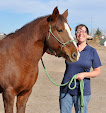
Jennifer Scott - Aspen Leaf Studios
 |
| Jennifer Scott |
 |
| various pieces finished by Jennifer Scott |
1. Learning Curve: Oils do take longer to get the hang of than other mediums, but that’s because there are just so many ways to use them! So in essence, it takes longer because you’re developing many skill sets at once. And the word skill never goes hand in hand with instant. There can be some pretty major “ugly stages” and you just have to keep pushing through. I promise it’ll get beautiful if you just keep going. Maybe not on one piece though. It’s important to learn what you can from a piece, call it finished, and move on to the next. This is more in general than specifically to oils, but I find a lot of beginners want to make their early pieces look perfect and so never finish them. Fact of life: your early pieces are not going to look all that great. Go in with low expectations and treat those initial pieces as what they are – teachers. They’re not going to be your million dollar sales pieces right away. They’re going to be the ones that show you how to get there over time.
 |
| Sweet Basil, Morgen Kilbourn Hazel resin painted by Jennifer Scott in 2010 a really nice horse, but not as nice as her 2020 work |
 |
| Jenn's painting table |
 |
| Smoothing out those brushstrokes! |
 |
| Anise, sculpted and painted by Jennifer Scott, 2020 |
Melanie Miller - Mel Miller Equine Art
 |
| Melanie Miller, photo by Julie Ward |
 |
| Mickey, Breyer Shannodell custom by Melanie Miller Winner of the 2017 BreyerFest Best Customs Contest, Finishwork |
 |
| Escar Go For Broke, Breyer Emerson custom by Melanie Miller |
 |
| Melanie Miller's 2019 NaMoPaiMo model acrylic over oils |
Lynn Cassels-Caldwell - Snowdrift Studio
 |
| Lynn Cassels-Caldwell |
CONS: Slow drying time. Can be messy.
 |
| Aashiq resin painted by Lynn Cassels-Caldwell |
 |
| Lynn Cassels-Caldwell's 2019 NaMoPaiMo model |
 |
| various pieces finished by Lynn Cassels-Caldwell |




 Posts
Posts


.jpg)


No comments:
Post a Comment