One of my favorite quotes about painting model horses comes from Jennifer Scott. She says: Every medium has a super power. Use it. An in fact, most model horse painters are mized media artists, at least to some degree. In this installment of Allie Davidson's guest post, What Should I Use to Paint My Model? we talk with two artist who are known for their airbrushing, but as you will read, the airbrush is but one took in their painting arsenal. Thank you, Allie, DeeAnn and Karen!
DeeAnn Kjelshus – Art by DeeAnn
 |
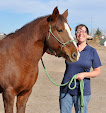
| DeeAnn Kjelshus with her 2020 NaMoPaiMo horse |
I like to use acrylic paints on my custom and resin horses. Most often, I use them in combination with pastels, colored pencils and oil paints. Acrylics are versatile and have many advantages along with a few disadvantages.
 |
| A group of horses by DeeAnn Kjelshus |
One of their many advantages is that they are water based. Therefore, they can be thinned down with water. In addition to thinning with water they can also be cleaned off brushes with soap and water. This can be a deal maker if you don’t like the smell or mess of solvents needed to clean off oil paints. Another advantage is that they dry quickly, so there is no need to wait between painting sessions for paint to dry. They will not reactivate when you paint over them, like water colors and oils which may bleed when painted over. You may also safely ship or travel your pieces when they are dry enough more quickly than with a piece painted with traditional oil paints.
 |
| Catalina resin by DeeAnn Kjelshus |
A disadvantage to them drying so quickly is that they cannot easily be blended using the “wet on wet” technique as you would with oil paints. Acrylics will also dry quicker on the palette. You can, however, add a retarder to slow the drying time and allow you more time to work while the paints are still wet. (Jennifer: a wet palette can keep your paints usable for several hours or more). I enjoy working with acrylics in an airbrush as well as hand painting. I use them several different ways with different media.
 |
| Breyer mini Alborozo by DeeAnn Kjelshus |
I often airbrush them as a base coat for my oil paints, adding some basic shading with acrylics first. I will also base coat them for pastels, and then go back and forth with washes over the pastels to get the affects I desire. I also love dry brushing with acrylics, it can give certain affects that I have not been able to achieve with other media.
 |
| Valor resin by DeeAnn Kjelshus |
I would highly recommend acrylics to any artist. I believe they are a very useful and versatile choice.
Karen Zorn/Zorn Art Studio
I do
finishwork on horses with airbrushed basecoats, then and hand-created hair
detail with colored pencils, and hand-painted patternwork in dilute white
acrylic. I use smidgens of panpastels for noses, ermine spots, softening small
areas, and mane/tail tips.
 |
| Karen Zorn's 2019 Best Customs Contest Finishwork winner |
I prefer
the airbrush, mine are Iwata Custom Micron Bs, to attain a smooth and glowing
coat. Each different coat color is created with layers (up to 12 or 15) done in
custom-mixed Golden High Flow acrylic. Every few layers, the horse needs to dry
and cure for a few days, then be sealed. I use Krylon Flat Clear as a working
sealer, and Testor’s Dulcote as a final lacquer.
 |
| Eberl Cobra mare by Karen Zorn |
Pros:
water cleanup, smooth application, no three-week curing time at the end.
Cons:
airbrushing well without grain or spatter takes a lot of practice since
airbrushes can be extremely fussy about the viscosity and the air pressure
powering them. Replacing parts that wear or get accidentally damaged can be
expensive. Horse-colors in the ready-to-use Golden High Flow line are pretty
limited, and you have to mix up your own formulas.
 |
| Mini Khemosabi by Karen Zorn |
Colored
Pencil hair detail can create very soft-looking haircoats. I generally start
with a darker airbrushed basecoat and work the coloring up with the pencils.
The difficulty is the patience required to do numerous layers of tiny light
hairs in the direction of the horse’s haircoat. Multiple colors of pencils are
used to give the depth of color. Each layer of pencils must be sealed and
completely dried (at least 24 hours) before continuing with more layers. Some
kinds of artist’s colored pencils can seem to disappear a bit when sealed
(PrismaColor VeriThins and Polychromos oil based pencils are the main
culprits.) Caran D’Ache Pablos are a nice brand to use as well.
Pros:
easy control, and PrismaColor Premiers are inexpensive and readily available.
Cons:
The urge to press down too hard will result in poor line quality that doesn’t
want to stick to the horse. Use an extremely light sketching action. Layering
is required, often 6-8 layers of hairs all over the entire horse. You must keep
your pencil points extremely sharp, a good precision manual crank drafter’s
pencil sharpener is important to have. You’ll go through a lot of pencils to
keep them razor sharp.
 |
| Fritz by Karen Zorn |
White
patterning
I like
to use Golden Titanium White, in a soft-body tube diluted with Golden Airbrush
Medium; or in the High Flow Line. Sometimes it can be hard to get the first
layer of the thin white paint to stick to the sealer over your basecoat. Just
keep moving the paint around in small areas at a time and it should adhere. If
you really get in a jam, add a tiny dot of gesso. Finding the correct thickness
of the white paint is really a matter of personal preference. The first bunch
of layers on your pattern will look weird and amateur, and you will think “This
will never work!” but if you allow each thin layer to dry, you will be able to
apply many many layers on top to make the white opaque and brush-stroke free.
Paintbrushes:
a use a cheap Michael’s brand round for covering larger areas. For detail, I
prefer the really tiny 00000 round and liner brushes in sable if you can find
them, and they can be pricey. There are some decent tiny synthetic sables done
by Windsor and Newton as well as a company called AIT (those were found on
Amazon).




 Posts
Posts


.jpg)


No comments:
Post a Comment