Friday, April 15, 2011

More on Charlie the Jumping Mule

This is so cool.

After reading yesterday's post, Shannon Granger was inspired to do a little research on Libby Chase and her jumping mule Charlie.  She found this article in a 1956 edition of Sports Illustrated.

THE JUMPING MULE

After a lifetime of what might be described as involuntary social climbing, Charlie the Jumping Mule has finally crashed society; last week despite his long ears and less than perfect family background he competed as a hunter in the seventh annual Chicago Hunter Trials at the Oak Brook Polo Club, Hinsdale, 111. Charlie seemed rather bored but his fond owner and rider, Mrs. Libby Chase Swift—a wiry, middle-aged Chicago socialite who possesses a certain sense of drama—was tremendously set up by it. Recognition had not come without struggle.

Charlie, one might say, is Mrs. Swift's invention; at any rate it was she who decided to breed a Thoroughbred mare named Kilishia (whose Grandsire, Black Toney, also sired two Kentucky Derby winners) to a jackass ten years ago, and Charlie was the result. When Charlie was two, Mrs. Swift began training him with her jumpers. Charlie soon proved that he could leap over almost anything—if he was in the mood—and Mrs. Swift, delighted with his talent and personality, took him to her ranch in California and set about preparing him for greater things. She held parties for him on his birthdays and brought him into her house, shod in green felt house slippers, to eat cakes made of oats and bran with carrot frosting. She also rode to hounds with him.
When she attempted to enter him in California horse shows, however, she was refused; also, nobody would admit Charlie was a hunter, although he loved fences so much that he jumped them by himself and sometimes went from pasture to pasture releasing horses incarcerated therein by opening gates with his nose. Mrs. Swift rebelled by holding a "mule show" in which Charlie won ribbons, but real social recognition was refused him. "They're new out there in California," said his owner, "and they wouldn't qualify him."
But a few weeks ago Theodore Mohlman, joint master of hounds for the Oak Brook hunter trials, agreed to let Charlie enter. "I don't see any reason why he shouldn't be permitted to jump as a hunter if he's doing what he's supposed to do. If he carries his rider across country and across fences, well, in my opinion that makes him a hunter." Charlie responded amiably enough in his first official trial and took Mrs. Swift over nine obstacles in the Ladies Hunters Trial with ease. He did not win. "It's a nice jumping mule," said the judge, "but it hasn't got style and it looks like it likes to eat, too."
Charlie got more attention than any of the horses, however; Mrs. Swift saw to that by pulling four gold-colored rubber shoes over his hoofs and riding him through the Polo Club dining room at lunch.
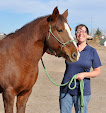
Inspired by Shannon's efforts, I also plugged Libby and Charlie's names into Google.  My efforts were rewarded with this November 26, 1956 article from Life Magazine.  I also found the pictures accompanying today's post.  They were taken by Life photographer Grey Villet and are just a few of the many photographs he took of the pair.
I've spent the day been forwarding my finds to Trish who is sharing them with her husband (Libby's grandson).  It's been a lot of fun for all of us...  I know I said this before, but this is so cool! 

Thursday, April 14, 2011

Charlie the jumping mule

Remember Jennibray?  

My friend Trisha saw the blog post about her and was immediately reminded of her husband's grandmother Elizabeth (Libby) Swift and her jumping mule, Charlie.
Trisha writes: Libby would enter this mule and compete against warmbloods and beat all of them. Eventually the shows banned mules (wonder why?) so Libby had her OWN shows (and still won). Charlie was so much a part of Libby's life--we have photos of Charlie IN the house when Libby had guests over.  
Although neither of these pictures are dated, they're probably from the late 1940's or early 1950's.  Thanks so much to Trish for sharing--I love your grandmother-in-law's jumping mule!

P.S. Sorry about the recent lack of posts.  I caught James' stomach bug and it's been a rough couple of days.

Monday, April 11, 2011

Dressage for the Model Horse, Part Three


Dressage for the Model Horse: A Gait-By-Gait Analysis

by Jamie Stine

The Canter

Whew! The Canter! Yay!

So, I am of the firm belief that it’s much easier to show a cantering horse well (and in lots of classes) than a trotting one!  The first time I heard this was from a veteran performance shower who I greatly respect, but the more I thought about it, the truer it is.  There are lots of ways to show a cantering horse, and they are quite easy to show in dressage, because every dressage test (except Intro Level) has at least some canter in it.  Indeed, the Grand Prix and Grand Prix Special tests seem to be mostly canter to those who haven’t seen the test sheets.  That being said, let’s proceed.

Cantering OFs that are suitable for dressage include: the Moody Andalusian Stallion, who is cantering along somewhere between a collected and medium canter.
Breyer Andalusian owned & photographed by Kellye Bussey
Alboroso is sitting on his haunches turning – you can make the case for a pirouette quite easily.
Breyer Alborozo owned & photographed by Kellye Bussey
Roxy is not really collected or on the bit, so if you choose to show her in dressage, it would be a good idea to include some sort of info card explaining this.  I’d probably leave her out of the dressage arena if it were me, but lots of people try to stick their OF performance horses in every class, so you can put her in a training level or pony club dressage test with a good explanation card if you’re creative about it.  
Breyer Roxy owned & photographed by Erin Corbett
The same is also true for Flash and the Showjumping Warmblood.  
Breyer Flash photographed by Erin Corbett
Gem Twist is cantering nicely forward and is close to on the bit.  He can be shown in training or first level dressage as well. 
Breyer Gem Twist photographed by Jennifer Buxton
If you’re a mini shower, the G3 Cantering Warmblood Mare is a lovely dressage entry!  She’s on the bit, cantering freely forward, and looks very happy to be doing what she’s doing. 
Breyer G3 Cantering Warmblood mare photographed by Kim
The G2 Warmblood Stallion is cantering on a turn.  He is more collected than the G3 mare, and as such can be shown at a higher level.  He could be seen as going into a pirouette or about to make a turn into a volte (small circle) or perhaps turning to make a half pass.  He is not as quiet in the tail as the G3 mare, but he’s a bit more dynamic of a sculpture, so this can be forgiven.
Breyer G2 Warmblood photographed by Kim
And, as usual, there are many many cantering AR’s that can also be used in dressage classes.  For lower level dressage you have Sommer Prosser’s nice hunter gelding Windfall, who is cantering in a nice, calm, working canter, not collected, but connected with a light contact to the bit and a nicely high poll, even though his neck set is a touch low.  He can be used in a Training or First level setup quite easily; I’d especially like to see him with a youth rider doll because he looks so honest.  So can the BHR Cantering Hunter, if you can get your hands on one.  
Windfall painted by Sommer Prosser and owned & photographed by Jennifer Buxton
You can also use Knightly Cadence in Training, First, or possibly Second Level dressage tests.  He’s a bit more elevated, but isn’t quite stepping underneath himself enough to be considered in a highly collected canter like you’d like to see in a Fourth level or higher test.  
Knightly Cadence painted by Carol Williams and owned & photographed by Erin Corbett
Another model that you could possibly consider showing in dressage is Hazel by Morgen Kilbourn.  Hazel is cantering QUITE forwardly, some would probably say too forwardly, but you can possibly fenagle her into either an FEI young horse class, where brilliance is rewarded, or possibly show her in Second Level or so, where medium canter is first requested.  Personally, I probably wouldn’t put my Hazel in a dressage class because of the other models out there that can do it better, but it is possible to do it if you’re creative. 
Hazel painted by Jennifer Scott and owned & photographed by Jennifer Buxton
The same is true of Jasmine the mule.  Jasmine is cantering, but her canter isn’t particularly forward.  She’d probably do decently if she was shown at Training Level or in a pony club or eventing dressage setup, but if she were shown in a level higher than that, her gait would probably penalize her.  She’s just kind of chugging along, listening to her rider but not quite brilliant in her movement. 
Jasmine painted by Tiffany Purdy and owned & photographed by Jennifer Buxton
Transitional models, which could be shown from Second to Fourth level or so, are guys like Vigil and Deseoso.  Both of these horses are cantering forward with their inside hindleg reaching almost under the seat of the rider.  This is the sign of a collected canter.  Vigil is not quite as collected as Deseoso, while Dese is moving with a larger stride than Vigil, which gives him a bit more brilliance.  Some judges will say that Deseoso is not in a collected canter because of how forward he is moving, but as a real dressage rider, I find that this is a typical collected canter for a Spanish Bred horse. 
Vigil painted by Karen Gerhardt and owned & photographed by Jennifer Buxton
Deseoso painted by Cathy Wallden and owned & photographed by Jennifer Buxton
I also really like Arista by Tracie Caller.  Arista is a lovely mare, up, forward, and powerful.  She’s probably just about to start an extended canter down the long side, or else she IS extended cantering, and this is the “up” phase of the stride.  She’s not quite compressed enough to be shown in the upper levels, but she makes a very lovely 3rd or 4th level horse if shown correctly.  Some judges will disagree with me, I’m sure, but I think Arista looks like she’d be a really fun ride, with her power just contained beneath the rider’s seat and her outlook going “whee!”

We also can’t forget Valentino by Bridgitte Eberl and Depeche by Jenn (Irwin) Scott.  Both of these guys are incredibly similar, came out at about the same time, and are hard to tell apart at first glance, so I’ll just describe them both together.  They’re in a collected canter, just a touch more forward than the collected canter you’d see from a horse getting ready to do a change or a half pass in a dressage test.  Either of these guys can be shown anywhere from 2nd level to Grand Prix, and both are very very correct.  

Valentino painted by Tom Bainbridge and owned & photographed by Jennifer Buxton

If you prefer a Spanish touch, there’s Tenorio, by Kristina Lucas-Francis and Verocchio by Bridgitte.  Both of these guys are fundamentally similar – they’re cantering forward but collectedly, though Verocchio appears to be more collected and Tenorio is slightly more forward.  They can both be shown from 3rd Level up, though I’d like to see them shown probably at PSG, where the pirouettes are first shown in high collection.

There are also a few specialty dressage resins in canter, like Tracie Caller’s Virtual Reality.  You don’t see VR very often anymore, but he’s still a very nice example of a large trad doing a canter pirouette.  (Another, similar example is the china Pour Horse Voltage, by Kristina Lucas-Francis, but since she’s a china, and I’m a klutz, that’s as much as I’ll say about her!)  Virtual Reality can be shown at any level where canter pirouettes are called for, so US Fourth Level and above, and all of the FEI levels from PSG to Grand Prix.    
Virtual Reality painted by Patti Miller with added detail by Jennifer Buxton
owned & photographed by Jennifer Buxton
For those of you who like minis, there’s Morsel by Kristina Lucas-Francis, who is cantering forward collectedly.  I’d like to see him shown a lot more often than he is, personally.  
Morsel painted and photographed by Karen Beeson and owned by Kellye Bussey
There’s also the lovely Vivaldi by D’arry, who is in a nice, up collected canter.  She looks like she’s having fun for sure.
Vivaldi owned & photographed by Rachel Pierce
So that’s it!  That’s the breakdown of OF’s and ARs by gait!  I hope it was helpful, and I’d be more than happy to answer questions anyone might have, or provide commentary on specific models not mentioned here, or even justify the choices I’ve made.  I’m always pro education, especially when it comes to my favorite sport!  I hope you've enjoyed reading this as much as I’ve enjoyed putting it together!


Thanks so much to Jamie for writing this article and to everyone who contributed pictures!!

Sunday, April 10, 2011

Dressage for the Model Horse, Part Two

Dressage for the Model Horse: A Gait-By-Gait Analysis

by Jamie Stine


The Trot:


There are tons of trotting horses out there, both OF and AR.  The OF horse that comes to mind immediately is the Cleveland Bay, who is doing a lovely forward trot, nicely on the bit, listening to his rider.  I love this mold; he’s easy to show, he can show in almost every English class as well as in harness and other things, and he’s quite correct for an OF.  He can show in dressage up to 2nd level, because his trot is somewhere in between a working and medium trot, which is first called for in US 2nd Level Tests. 
Breyer Cleveland Bay photographed by Erin Corbett
Strapless is also a lovely OF who can be shown in dressage.  She’s also trotting forward, but her frame is much longer, which makes her suitable only for low level tests; she’s also turning, which means that her positioning in the arena needs to be accounted for, but she’s got such a lovely, soft expression that if you place her in a corner of the arena or on a circle, she does very very well. 
Breyer Strapless painted by Danielle Feldman and owned & photographed by Jennifer Buxton
Giselle is also trotting, nicely flexed but with an open throatlatch and a high poll, but she’s not going as forward as Strappy or the Cleveland Bay.  She can also show in lower level dressage tests. 
Breyer Giselle/Stage Mom photographed by Jennifer Buxton
And who could forget the Peter Stone Palouse?  There are lots of lovely FCM Palouse’s with their head and neck fixed to be more on the bit, and these can be shown in the same way as the Cleveland Bay.  But even the uncustomized Palouse can be shown in an Intro or green as grass dressage test.  She’s trotting forward, calm, and nose poked out , not really anywhere near on the bit, but fulfilling the requirement of “traveling freely forward.”  She makes a good intro horse, or a horse with a child rider, similar to Shirley.
Peter Stone regular and head down Palouses photographed by Jennifer Buxton
And if you like to show in mini scale, the Stone Pebbles Warmblood is doing a nice training or first level trot.  
Pebbles Warmblood photographed by "PolarVrtX"
There are also the G4 “Dressage” and “Driving” stablemates, both of which are trotting.  The Dressage warmblood is making an extended trot – he’s better than the old Breyer Hanoverian, but he’s still not QUITE correct; he’s lovely for an OF doing an extension, though.  The Driving horse is making a nice, straight working trot, also on the bit, and is pleasantly forward and looks quite happy to be working for her rider.  Both of these guys are very nice for their size.

For an OF that can show in upper level (4th Level and above) dressage, you can’t beat the Stone Spago in resin or plastic.  Spago is making a trot half pass to the right and can be shown in 3rd level all the way up to Grand Prix.  He is collected, bent correctly, and stepping under the rider’s seat with his left hindleg. 
Stone Spago photographed by Erin Corbett
And finally, for Intermediare II and Grand Prix, you have Salinero.  Salinero is passaging, which is one of the most collected forms of trot.  He is poll high, nose on the vertical, hindlegs stepping under, front legs elevated.  He can only be shown in upper level dressage, because passage is only shown in the very highest of competition levels, from I-II up to Grand Prix Special and the Freestyle.
Breyer Salinero photographed by Erin Corbett
Fortunately for AR showers, there are many, many trotting resins out there that are suitable for dressage.  For the lower levels, we have Eberl’s Shirley, who is trotting energetically forward, if not on the bit.  She could be shown with a youth rider in an introductory level or even dressage suitability setup.  I can also see her packing around a para-dressage rider, if someone wanted to create something like that. 
Eberl Shirley painted by Chris Nandell and owned & photographed by Jennifer Buxton
There are tons of sport type models in all sorts of frames… Continuing with the lower level theme, we have Godiva, again by D’Arry...
Godiva owned & photographed by Rachel Piece
as well as several minis by Brigitte Eberl, like Bacardi and Brandi, who are both trotting forward; they could be used for lower or middle levels of dressage for the mini shower.  There is also Pasha by Sifton, and the Peter Stone Chips Warmblood, available in both plastic and resin versions. 
Brandy painted by Jeannine DeCuir and owned & photographed by Sharon Wishart
Bacardi painted by Jeannine DeCuir and owned & photographed by Sharon Wishart
For the big guys, we have Absinth by Brigitte Eberl, as well as several other warmblood or sport type sculpts by her.  Absinth is probably the easiest to get though, as he’s being cast in the states.  He’s perfectly acceptable for dressage up to 3rd level, but I really like to see him shown in the FEI Young Horse classes.  Absinth to me is not a seasoned competition horse, but a youngster just starting out.  Other people may see him differently though.
Willoughby is also a lovely and fairly correct dressage horse, executing either a large medium or smallish extended trot, depending on the level.  Again, he can be shown anywhere from 3rd level to Grand Prix quite successfully. 
Willoughby painted by Cheryl Calentine and owned & photographed by Kellye Bussey
 Another “old standby” is Kathleen Moody’s Utopia.  Though Utopia is somewhat dated, he is trotting quite forwardly and turning slightly, which makes him suitable for dressage up to 2nd level.  Most people show theirs at training or first level, which are, of course, completely appropriate. 
Utopia painted by Cheryl Calentine and owned & photographed by Jennifer Buxton
If you prefer a bit of Spanish flair in your trotting model, you’re in luck!  Again, Brigitte Eberl has sculpted many many trotting Spanish horses, though most of these are difficult to get due to small edition sizes.  Some favorites are Arlequino, who is floating across the arena in a lovely extended type trot, Puro Oro, who is somewhere between a collected trot and a passage, depending on how you look at him, and Havano, who is definitely Piaffing, which limits him to upper level showing. 
Puro Oro painted by Sheryl Liesure and owned & photographed by Kellye Bussey
 For the upper levels you also have the incomparable Deputed Duke and Dinky Duke, both by Morgen Kilbourn.  Either of these guys can be shown anywhere from 3rd level to Grand Prix.  They are making a half pass, Deputed Duke (the big guy) to the right, and Dinky Duke (the little guy) to the left.  (Dinky is a mirror image of Deputed Duke.) 
Dinky Duke owned & photographed by Anna Kirby
Kinetic Potential, by Kristina Lucas Francis, is, IMHO, the most correct extended trot dressage horse there is.  He is moving freely forward, his front foot is pointed where he will land, and his hind foot matches the angle and height of his front foot.  He’s also open enough in the throatlatch that he’ll be able to extend his frame all the way out as far as his stride can reach, which is correct. 

There is also the incredible Lohengrin by Brigitte, though he is HUGE and will require his own tack.  He is also Piaffing, so he may only be shown at Intermediare II to Grand Prix. 

Another lovely Piaffing Pony in tiny size is DaCaprio by Stacy Tumlinson.  Both Lohengrin and DaCaprio though require a little bit of customization to be completely correct; they both need their throatlatches opened and heads raised so that the poll is the highest point and the nose is vertical or just slightly in front, as per the FEI Description of Piaffe.

Saturday, April 9, 2011

Dressage for the Model Horse, Part One

Dressage for the Model Horse: A Gait-By-Gait Analysis

by Jamie Stine

Dressage is probably the pinnacle of horse sport when it comes to horse/rider partnerships.  Sure, there are no huge scary fences involved, but a dressage horse and rider have to have a dynamic, living, breathing partnership and almost be able to think the same thoughts at the same time to be successful.  That makes dressage pretty intimidating for some real horse people…

And model horse people seem to think the same way!  Dressage requires a huge setup, and specialized knowledge, and lots of preparation!  Well, not quite.  I mean, yes, it does help if you’ve done your research, but there are lots and lots of models that are suitable for a dressage type setup, both OF’s and Resins.  And of course you can have a dressage horse customized into just about any gait or position you want.

What I’m going to do in this series of posts is analyze some common (and not so common) OF’s and AR’s for their dressage potential.  I’m going to do it gait by gait, since that seems to be the most logical way to arrange things, and for specialized things like extensions or pirouettes, or half passes, I’ll do those within the gait that the horse is performing.  (Deputed Duke, for instance, is doing a Trot Half Pass to the right, so we’ll discuss him under trot; make sense?)

The Halt:


The halt is a movement performed at least once in all dressage tests, from Introductory Level all the way up through Grand Prix Freestyle.  Its purpose is to test the obedience of the horse to the rider’s seat/weight aids, as well as the connection with the bit.  This being said, a good halt has the following qualities:  it retains it’s forwardness (that is, the horse is poised, ready for the next cue, but stands attentively), it is calm, the horse remains on the bit (flexed at the poll, not leaning into the rider’s hands), and the horse’s weight is evenly distributed over all four feet (he is standing square). 
Breyer Lady Phase owned & photographed by Jennifer Buxton
There are many model horses that are standing on all four feet, but there are very few who could be said to be in a “proper” halt for dressage.  HOWEVER, halts at introductory level (or green as grass level in some parts of the country), do not need to be square, and are not expected to be anywhere near on the bit.  So Matriarch, Lady Phase, and other “standing attentively” models may be shown in dressage with the caveat that they should be shown at Intro level.  The Intro level tests are not difficult to find, and this gives those “standers” an opportunity to show in performance other than showmanship or trail. 
Matriarch painted by Susan Hurst owned & photographed by Jennifer Buxton
A horse like Jamil, on the other hand, though standing attentively, isn’t really paying attention to his rider; he’s looking off into the sunset at puppies, or balloons, or someone on the sidelines with an ice cream cone. 
Jamil resin by Berit Anderson owned & photographed by Jennifer Buxton
The Ideal Stock Horse also has this issue.  They’re lovely horses, they’re just not poised for their next move the way they should be. 
Peter Stone Ideal Stock Horse owned & photographed by Jennifer Buxton
The G3 Standing Thoroughbred, while not completely square, is one of the best OF dressage horses there is when it comes to minis.  He’s on the bit, he’s paying attention to his rider, and he looks like he’s ready to step off into whatever happens next. 
G3 Standing Thoroughbred photographed by Kim
 Another very decent OF horse that could be shown in dressage is the Bouncer pony.  Though he is not quite square, he’s nicely on the bit and paying attention to his rider.  He is slightly flexed to the left though, so that’s something to be aware of when choosing a dressage test. 
The Walk:


There are tons of walking models out there, and several of them can be shown quite successfully in the model dressage arena.  An OF that comes to mind immediately is John Henry.  Even though the older ones are wonky and lumpy and have weird legs, he’s doing a lovely free walk, with his hind leg coming up under the rider’s seat, and his head and neck stretched out towards the bit, but he’s obviously still holding contact with the rider’s hand.  This is exactly what a free walk should look like. 
Breyer John Henry owned & photographed by Jennifer Buxton
Another quite lovely walking model is Romke the Freisian.  Romke is on the bit, walking forward, but not quite as forward as John Henry.  I’d say Romke is doing a working or collected walk, which are movements called for in Training Level to Grand Prix.  Working (or Medium) walk is the standard walk used in US dressage tests through 3rd level.  The first time we see collected walk is at 4th level or Prix St. George.  Romke is more suitable for lower level dressage classes because he’s not quite “sitting” down on his haunches enough to be an upper level horse.  I’ll explain this a little further when we get to trot.  
Romke painted, owned & photographed by Jennifer Buxton
Horses like Lonestar may be shown in dressage as well, but you’ll have to get a bit creative with his positioning.  Lonestar is walking, yes, but he’s not really walking with purpose, he’s just kind of dawdling along, looking at the birds or what have you.  Now, again, you can show him in Intro level or with a child rider, and this should be fine with an explanation card, but he’s not really suitable for Upper Level dressage by any stretch of the imagination.  If you need to get him in more classes for his division or overall championships though, then dressage is a good bet with documentation and a good explanation card.  
Lone Star painted by Liesl Dalpe and owned & photographed by Jennifer Buxton
Mozart by Frank is a wonderful walking mini if you can get your hands on one.
Mozart owned & photographed by Rachel Pierce
So is Handsome Devil, though he’s huge and will require his own tack set, which makes things a little difficult for some people to manage. 
Handsome Devil formerly owned by Vicky Norris
Rayne, by Fraley, is in a nice forward walk with a long neck .  He’s Little Bit scale, so bigger than standard mini scale, but definitely gives those mini showers something to work with.

Stay tuned for tomorrow's post which will cover trotting and cantering models!

In the works

After I'd finished judging the Over Fences class at the Show for the Cure, one of the competitors came over and asked why her entry hadn't placed.  Her model was beautifully outfitted in a full set of Corinne Ensor tack, his jump was nicely made and of the correct scale and the entry was properly documented.  There was absolutely nothing wrong with that entry except for one thing--the horse was a Breyer traditional Black Beauty.
This particular model is a poor performance prospect for one simple reason--he's cross cantering.  That is, he's cantering on one lead in front and another behind.  This isn't unrealistic per se.  Real horses can and often do cross canter.  However, it's an uncomfortable and awkward gait for both horse and rider and is considered a fault in all disciplines.

Performance showers with real horse experience tend to take this sort of knowledge for granted.  However, a lot of hobbyists come from non-horsey backgrounds.  This shouldn't preclude them from performance ring success, but unfortunately that's often the case.  

In an effort to level the playing field, I'm debuting a series of articles aimed to help both novice and experienced performance showers.  The first one will be posted later today and is written by Jamie Stine.  Jamie is a dressage rider who has also groomed upper level dressage and event horses.  Her article will analyze a number of common and not so common models in regards to their suitability for showing dressage.  If you have similar event specific knowledge and would like to share your expertise, please get in touch with me.  I would also be happy to field suggestions for future articles.